

IN THE MIDST OF THE CHAOS of 2025, the two American political parties each think they know the right path for going forward. Democrats are looking to the future and want to make life easier for people and protect the planet, whose resources people depend on. Republicans want the security of holding onto the past and think that if the billionaires can be in control, they will solve all the big problems and keep us on track. After all, they figured out how to achieve financial success. These two parties are like the blind men and the elephant: each has only one part of the beast, but each thinks their piece is the whole of it.
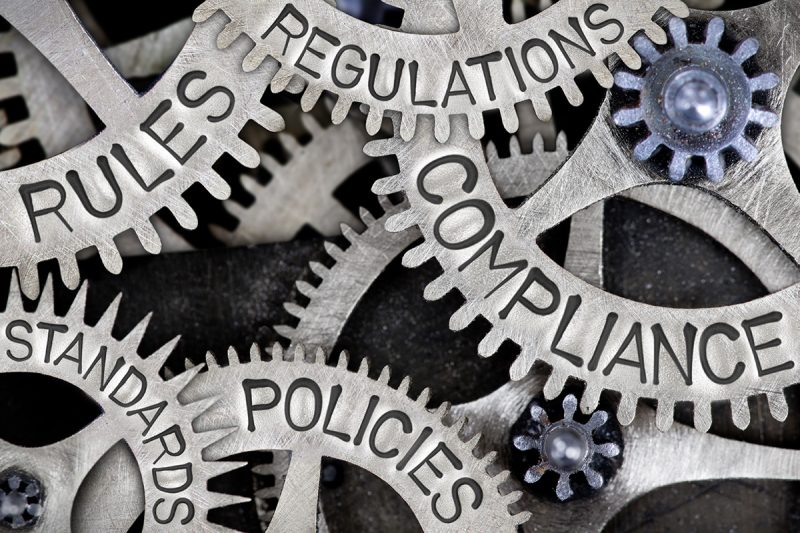
To see the whole elephant here, we have to look at context. The U.S. is in a period of breakdown that is taking place in the larger context of a global shift away from industrialization into a new focus that is still taking shape. The new sciences of chaos and complexity tell us that paying attention to relationships gives us information needed to solve our major complex problems. Each age we pass through builds a structure of rules and regulations as guidance and to keep everything moving in concert toward the era’s goals. The industrial age was no exception.
Democrats, while looking toward the future, are still operating according to the rules and regulations of the industrial era. Ironically, while these guidelines brought inventions that made life easier and created the technologies that expand our current capabilities, they also led to racism and increasing wealth gaps, splintering our population into factions. The same way of thinking that brought us material progress is a barrier to finding solutions to the problems it created.
As long as Democrats continue to operate according to those old rules and regulations, they can’t actualize their ideas, and that makes people angry and distrustful. For example, Democrats preach unity, but they can’t erase the social divisions. People sense that their hands are somehow tied, and it makes them discount and lose faith in the Democrats, who will keep putting out good ideas doomed to failure until they can articulate new rules suited to the emerging paradigm and begin to act according to them.
Republicans are riding on the tail winds of the past as it devolves into obsolescence. They cling to the top values in the industrial era—money and power—thinking that everything will be fine if they can grab all the power and most of the money for themselves. For them, this is the path to security. They want the familiarity of the old, with the simplicity of the mechanistic model, its linear thinking, its winner-take-all thrust, and the comforts afforded by gargantuan wealth. They are blinded to the costs incurred by this paradigm: the depletion of natural resources; increasing poverty, hunger, and illness; climate warming; escalating immigration; endless war; and ultimately, the inability of the planet to sustain life.
One challenge presented by the need to shift paradigms is that we humans like simplicity, and the old paradigm can be alluring because its linear thinking seems to promise simple solutions, no matter the problem. In fact, however, messy, complex problems require a skillset based on the way nonlinear complexity functions. Humans and the interrelating ecosystems of the planet are anything but straightforward: all living systems are inherently messy and complex. A requirement for successfully living in a complex world is widespread knowledge about how to solve complex problems.
Both parties need to understand the paradigm shift we are all living through. Democrats need to figure out the new structures that can support their ideas for protecting people and the planet, and Republicans need to understand that the pathway to money and power is a dead-end street, literally. The question is how can we get this to happen? Our answer: start disseminating these ideas in local communities.
Blaming others is one attribute of the industrial paradigm’s culture. If we are to change direction and begin to help the new paradigm take shape, we must learn how to let go of blame and replace it with understanding. Every human being is flawed. With a generous, supporting attitude toward others, and a sincere interest in understanding their values and how they arrived at their belief system, we can be those needed handmaidens to the emerging paradigm, with its values of relationships and sustaining all forms of life on the planet. For those of you who may think this is warm and fuzzy thinking, all our lives depend on it. Going forward we will need both conservative and liberal ideas to build where we need to go.